Magic Dancing Tiles
- 4.8
- Rating
- 50.00M
- Installs
- Free
- Price

 Analysis by App-foxy
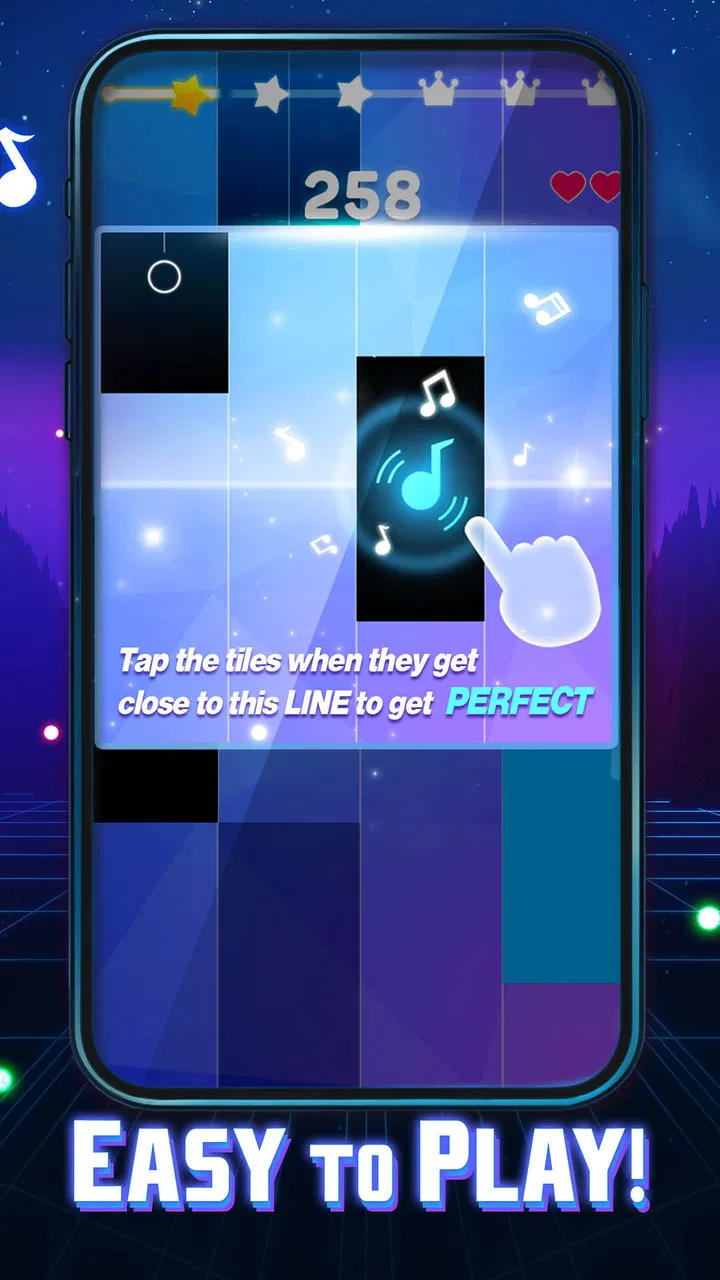
I spent time with Magic Dancing Tiles, a free music game from PHY STUDIO that turns familiar piano-tile tapping into a faster EDM-focused challenge. The basic idea is easy to understand: follow the moving tiles, keep the rhythm, and avoid breaking your run. What makes it worth discussing is not the premise itself, but how the game feels when a quick first session turns into repeated attempts to improve timing and survive a more demanding song.
This is the kind of game I can open for a few minutes while waiting for coffee, then unexpectedly keep playing because one mistake happened near the end of a track. It is also very approachable at first. You do not need music theory, a large screen, or previous rhythm-game experience. You mainly need attention, a reasonably steady finger, and a willingness to restart when your timing slips.
The game belongs to the music category, carries a Mature 17+ content rating, and is available at no upfront cost. Its store summary focuses on tapping piano music tiles in an EDM rhythm game, which is a fair description, but it does not fully explain the difference between casually tapping along and deliberately practicing a difficult section. That difference is where most of the long-term appeal sits.
You May Also Like

 AccuWeather: Weather Radar
AccuWeather Review: A Quick, Clear Forecast for Everyday Decisions
For everyday plans, the best forecast is the one you can understand quickly. AccuWeather makes rain timing, radar, and local conditions easy to act on, with a few trade-offs.

 Hill Climb Racing
Why Hill Climb Racing Still Turns Crashes Into One More Run
A tiny car, a bumpy hill and one more upgrade: Hill Climb Racing keeps resurfacing because its simple chaos makes every near-miss feel personal.

 AliExpress - Shopping App
AliExpress Makes Global Shopping Feel Personal, but Shoppers Bear the Risk
AliExpress turns a global marketplace into a pocket-sized discovery engine. Its reach is useful, its shopping loop compelling, and its trade-offs easy to miss.

 Lords Mobile: Kingdom Wars
Lords Mobile Is a Kingdom-Building Routine, Not a Quick Match
A case-by-case verdict on the building, battles, device demands, and social commitments that make Lords Mobile rewarding for some players and exhausting for others.

 PDF Scanner app - TapScanner
TapScanner Makes Paperwork Easier to Capture, Check, and Share
TapScanner makes scanning with a phone feel less like a rescue operation and more like a dependable step in getting work done. Its capture tools are useful, though not flawless.

 Block Blast!
 Shows How Much a Puzzle Game Can Leave Out
A quiet grid game shows why puzzle players increasingly value instant clarity, repeatable skill and low-pressure play—and where the genre still needs to catch up.
More From Our News Desk
View All News


How the first sessions establish a reason to keep playing
The early goal is immediately readable: tap the correct tiles as they appear and stay with the song. I appreciate that clarity because rhythm games can sometimes bury their main action under menus, currencies, or tutorials. Here, the central interaction is obvious within moments. I do not have to learn a complicated control scheme before finding out whether the game suits me.
That simplicity also makes the opening feel suitable for short sessions. If I have only a few minutes, I can start a track, concentrate on the pattern, and stop without needing to complete a long campaign. For a phone game, that matters. The best use case is not necessarily a long evening of uninterrupted play; it is a series of focused bursts during spare time.
My first practical tip is to treat the opening attempts as calibration rather than performance tests. I found it more useful to notice how quickly the tiles travel and where my finger naturally lands than to chase a perfect result immediately. On a small phone, a relaxed grip helps. Holding the device too tightly makes quick taps feel less precise, especially when the pattern becomes visually busy.
The EDM presentation gives the tapping a stronger sense of forward motion than a slow piano exercise would. Even when the underlying action remains simple, the music encourages me to anticipate the next tile instead of reacting only after it appears. That is an important distinction: I play better when I follow the beat and the visual lane together, rather than staring at one tile at a time.
There is a trade-off here. Players who want a traditional piano experience, expressive melody control, or a realistic instrument simulator will probably find the game too focused on reflexes. It uses piano imagery as the frame for an arcade rhythm challenge. I would recommend it to someone seeking quick musical action, not to someone trying to learn how to play piano.
What progress feels like when the game is working well
The most satisfying progress is personal rather than complicated. I notice it when a pattern that initially looked too fast becomes readable, or when I reach a later part of a track without panicking. A good rhythm game makes improvement visible through better control, and this one benefits from that direct relationship between concentration and performance.
That also means the game can be surprisingly honest about mistakes. If I tap early, the error feels like my error. If I lose focus for a moment, the run can unravel quickly. This is useful for players who enjoy skill-based repetition, but it may frustrate anyone looking for a relaxed music player with little pressure.
One non-obvious way to approach the game is to practice the transition between patterns rather than focusing only on individual tiles. The difficult moment is often not a single tap; it is the change from one movement direction or rhythm to another. Watching the space immediately beyond the current tile helps me prepare earlier and reduces the frantic feeling that comes from reacting too late.
I also found that sound and sight serve different purposes. The visual tiles tell me where to tap, while the EDM beat helps me predict when the next action is likely to arrive. If I rely on only one of those cues, I become less consistent. Playing in a reasonably quiet place, or using headphones when appropriate, can make the rhythm easier to follow, although I would still keep the volume comfortable during repeated sessions.
There is no need to approach every attempt as a full test of ability. Short, deliberate retries are more useful than tapping mindlessly for a long time. I would play a track once to understand its shape, then make a second attempt with one goal, such as keeping my eyes farther ahead or staying calm during faster passages. That turns repetition into practice instead of simple frustration.
Difficulty, pacing, and the point where patience matters
The difficulty curve in a tile rhythm game depends heavily on how quickly patterns arrive and how much visual information I can process at once. The early experience feels accessible because the rule is so direct, but that does not mean later play remains effortless. As the pace rises, the game tests anticipation, hand position, and consistency more than basic understanding.
That escalation is effective when I am in the mood for a challenge. A failed run can make me want one more attempt because I know the problem was close attention rather than a missing piece of equipment. On the other hand, the same structure can feel repetitive if I am not interested in improving a score or reaching farther into a song.
My most useful adjustment was to stop chasing the tile directly under my finger. I try to keep my eyes slightly ahead of the current action, allowing the next pattern to enter my awareness before it becomes urgent. This is a small habit, but it changes the game from frantic reaction to controlled prediction. It is particularly helpful when several taps arrive close together.
Screen size can influence the experience too. On a larger phone, the tiles may be easier to distinguish, while a compact display demands more careful visual focus. I would not rule the game out because of a smaller device, but I would expect a shorter learning period before the interface feels comfortable. Players with touch-accuracy difficulties may find the rapid tapping less forgiving than slower rhythm games.
The pacing is best for people who enjoy repeating a compact challenge until their hands and eyes cooperate. It is less suitable for someone who wants a story, exploration, or a large variety of non-musical objectives. The game’s appeal comes from the loop of hearing, watching, tapping, failing, and trying again. If that loop does not sound enjoyable, additional content alone would not change the basic fit.
Unlocks, motivation, and the pressure to continue
In practice, the strongest retention pressure comes from the desire to improve a run. A near-success creates a clear personal target: reach the difficult section again, survive it, and go a little farther. That is a more immediate motivation than a distant reward because I can feel the difference from one attempt to the next.
The free entry point makes it easy to test that loop without committing money first. At the same time, the game includes in-app purchases priced from $3.99 to $29.99 per item. I would approach those purchases carefully and decide whether the basic play already provides enough enjoyment before spending anything. A paid item can be reasonable for a player who is already committed, but it should not be confused with the skill gained through practice.
This is also where the Mature 17+ rating deserves attention. I would check the store presentation and device settings before handing the game to a younger player, rather than assuming that a simple piano-tile format automatically makes it suitable for children. The tapping itself may look harmless, but the age label is part of the product information a family should consider.
Another practical point is pacing your own sessions. Because attempts are short and failure invites an immediate retry, it is easy to keep playing past the point where concentration has dropped. When my timing becomes careless, taking a break is usually more useful than forcing another run. This is a small but important trade-off: the game makes restarting convenient, but convenience can turn practice into repetition without improvement.
I would also avoid judging the game solely by the number of available tracks or the presence of purchase options. What matters to me is whether the music and patterns make me want to return. If I enjoy the EDM rhythm and the satisfaction of cleaner taps, the progression can feel meaningful even without a deep role-playing structure. If I need narrative rewards or elaborate unlock trees, this will feel comparatively thin.
Who will enjoy it, and who should choose something else
Magic Dancing Tiles is a strong match for players who like quick reflex games, electronic music, and visible improvement through repetition. It works well as a short-session game for commuters, students between tasks, or anyone who wants a focused distraction that can begin almost immediately. It is also friendly to newcomers because the central action is understandable without a long explanation.
I would recommend it to a friend who enjoys rhythm games but does not want to learn a complex control layout. The one-finger-style tapping concept keeps the barrier low, while the faster patterns give experienced players a reason to refine their timing. The game can occupy the space between a casual time-killer and a more demanding music challenge.
I would not choose it for a player seeking a full piano-learning tool. It does not replace lessons, sheet music practice, or an interactive keyboard app. I would also steer story-driven players toward a different category, since the pleasure here is in performance and repetition rather than characters or exploration.
Compared with a traditional piano game, this one feels more like an arcade test built around piano visuals and EDM momentum. Compared with a dedicated rhythm game using several buttons, instruments, or complex lanes, it is easier to start but may offer less depth for players who want a broad skill system. That middle position is its identity: accessible enough for casual play, demanding enough to punish unfocused tapping.
The current version is 0.5.68, and the game supports devices running Android 7.1 or later. That makes it relevant to people using older compatible phones, although actual comfort will still depend on screen size and touch responsiveness. I would install it on the device where I am most likely to play with stable attention, rather than treating it as something to run constantly in the background.
My verdict after weighing the complete loop
PHY STUDIO has built a straightforward music game around a reliable source of tension: the next tile is always simple to understand, but not always simple to hit in time. The early goals are clear, the main progress signal is easy to feel in your own hands, and the difficulty gives focused players a reason to retry. Those strengths are enough to make the game enjoyable without pretending it is a full musical instrument or a deep progression adventure.
The limitations are equally clear. Repetition is central, so the experience depends on whether you enjoy mastering patterns. The free model includes in-app purchases, and the age rating means families should pay attention to the store context rather than assume the cheerful tile format tells the whole story. Players who dislike restarting after mistakes may find the pacing demanding instead of motivating.
With an average rating of 4.8 from around 48 thousand ratings and over 50 million installs, it has clearly reached a large audience. Those figures do not decide my opinion, but they fit my experience of a game that is immediately understandable and easy to revisit. I can see why it attracts people who want music, speed, and a challenge that starts with one tap.
My final recommendation is simple: try it if you want a free EDM rhythm game for short, repeatable sessions and enjoy improving through timing. Start without buying anything, learn to look slightly ahead of the active tile, and take breaks when your concentration falls. The best reason to keep playing is the feeling that a difficult pattern has become manageable, not the promise of a complicated reward system. For that focused purpose, Magic Dancing Tiles is an enjoyable and accessible choice.
FAQs for Magic Dancing Tiles
01What is Magic Dancing Tiles, and how is the game played?
Magic Dancing Tiles is a rhythm-based music game in which you guide a bouncing ball across a sequence of tiles while songs play. The main objective is to tap or follow the correct tiles in time with the beat, avoid mistakes, and reach the end of each track. As the speed increases, the game requires quick reactions, concentration, and accurate timing.
02Is Magic Dancing Tiles free to download and play?
Magic Dancing Tiles can generally be downloaded for free, allowing players to try its basic gameplay without an upfront purchase. However, the experience may include advertising, optional in-app purchases, or locked songs and features that require additional progress or payment. Before downloading, it is worth checking the current store listing and reviewing the purchase settings, especially if children may use the device.
03Does Magic Dancing Tiles work without an internet connection?
Some parts of Magic Dancing Tiles may be playable offline, particularly previously available levels or basic gameplay modes, but this can depend on the version installed. Internet access may still be needed for advertisements, new song downloads, updates, cloud features, or special events. If you plan to play while traveling, open the game online first and confirm which content remains accessible offline.
04Is Magic Dancing Tiles suitable for children and casual players?
Magic Dancing Tiles is easy to understand and can be enjoyable for children, teenagers, and casual players who like music and reflex challenges. Nevertheless, difficulty can rise quickly, and repeated attempts may become frustrating for younger users. Parents should also review advertisements, in-app purchases, music content, and privacy permissions before allowing a child to play without supervision.
05What permissions and device requirements should I expect from Magic Dancing Tiles?
The exact requirements vary according to the Android or iOS version and the game’s latest update. Players should expect the app to need enough storage for installation and possibly additional music or level data. It may also request network access for ads and online content. Always download it from an official store, check the listed compatibility, and review permissions before accepting installation.
Pros
- Simple tap controls make it easy for beginners to pick up.
- Fast songs provide an engaging challenge for rhythm-game fans.
- Bright tile effects make the gameplay visually appealing.
- Short rounds are convenient for quick gaming sessions.
- Progression encourages players to improve timing and accuracy.
Cons
- Difficulty can increase sharply after the early levels.
- Mistimed taps may feel frustrating on smaller screens.
- Some content may require ads or in-app purchases.
- Gameplay can become repetitive after extended sessions.
- Requires steady concentration
- which may not suit casual players.

Magic Dancing Tiles
Gallery